
Why PCOS Is Now Called PMOS — And Why This Change Matters for Millions of Women
PCOS has officially been renamed PMOS (Polyendocrine Metabolic Ovarian Syndrome) after a 14-year global effort by medical experts and researchers. The new name reflects a broader understanding of the condition as a complex hormonal and metabolic disorder rather than simply an ovarian issue. Affecting nearly 1 in 8 women worldwide, PMOS is linked to insulin resistance, fertility challenges, weight fluctuations, mental health issues, and increased risks of diabetes and heart disease. This article explores why the rename matters, how it changes medical understanding, common symptoms, treatment approaches, and why the shift represents a major moment for women’s healthcare globally.
May 18, 2026 · 6 min read
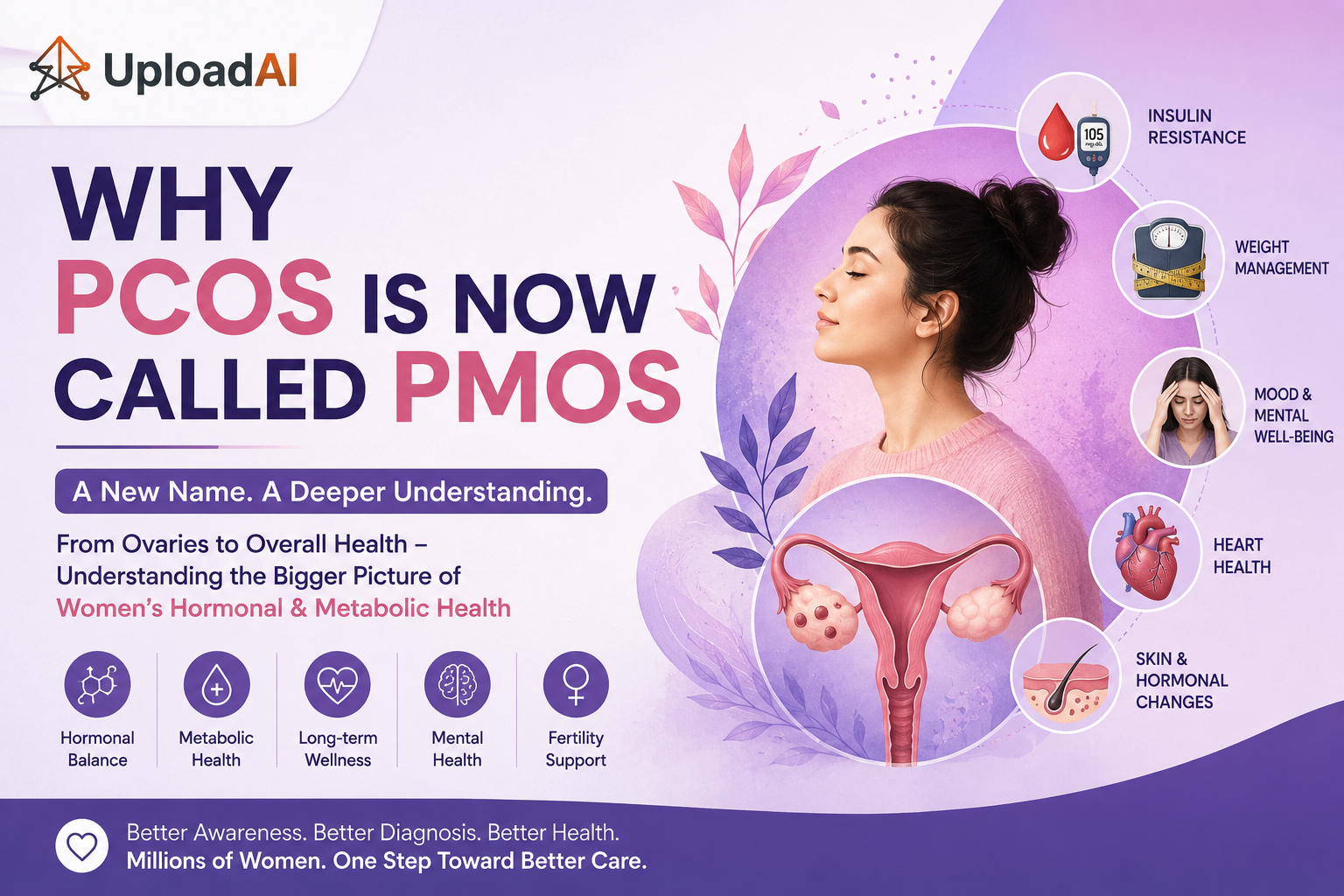
For decades, millions of women around the world have lived with a condition called PCOS — short for Polycystic Ovary Syndrome. But according to global medical experts, researchers, and patient advocacy groups, the name itself was flawed from the beginning.
Now, after a 14-year global effort involving researchers, clinicians, and thousands of women living with the condition, PCOS is officially being renamed PMOS — Polyendocrine Metabolic Ovarian Syndrome. The announcement was recently published in The Lancet and presented at the European Congress of Endocrinology.
At first glance, this may seem like a simple terminology update. But in reality, it signals a major shift in how women’s health is understood, diagnosed, and treated globally.
Because PCOS was never just about ovarian cysts.
The Problem With the Name “PCOS”
The term “Polycystic Ovary Syndrome” has confused patients and even healthcare professionals for decades. The name strongly implied that ovarian cysts were the defining feature of the condition. But experts now agree that many women diagnosed with PCOS never had ovarian cysts at all.
In fact, what appeared on scans were often immature follicles rather than actual cysts. Many women without visible cysts were dismissed, misdiagnosed, or left untreated because doctors focused too narrowly on ultrasound results instead of broader hormonal and metabolic symptoms.
The old name also failed to represent the true complexity of the condition.
PCOS affects far more than reproductive health. It impacts hormones, insulin function, metabolism, cardiovascular health, skin, mental health, sleep, fertility, and long-term disease risks. Experts say the outdated terminology contributed to delayed diagnoses, fragmented treatment, stigma, and poor awareness worldwide.
That is exactly why the new term PMOS was introduced.
What Does PMOS Actually Mean?
PMOS stands for:
Polyendocrine Metabolic Ovarian Syndrome
Every word in the new name reflects a broader understanding of the condition:
Polyendocrine highlights that multiple hormone systems are involved
Metabolic acknowledges insulin resistance and metabolic dysfunction
Ovarian retains the reproductive component
Syndrome reflects that it includes a range of symptoms and health impacts
The new terminology shifts the conversation from a purely gynecological issue to a whole-body endocrine and metabolic disorder.
This matters because nearly 85% of women with PMOS show insulin resistance — a major metabolic issue that can increase the risk of diabetes, obesity, cardiovascular disease, and other chronic health conditions.
The rename is not about rebranding a disease.
It is about correcting decades of medical misunderstanding.
A Condition Affecting Millions — Yet Still Underdiagnosed
PMOS is one of the most common hormonal disorders affecting women globally. Experts estimate that around 1 in 8 women are impacted. Yet up to 70% of cases remain undiagnosed.
That statistic alone reveals a massive healthcare gap.
Many women spend years struggling with symptoms without understanding what is happening to their bodies. Others are told to “lose weight,” “reduce stress,” or “wait it out” without proper evaluation.
The consequences are serious.
Undiagnosed or poorly managed PMOS can contribute to:
Type 2 diabetes
Infertility
High blood pressure
Cardiovascular disease
Anxiety and depression
Sleep disorders
Chronic inflammation
Hormonal imbalances
Severe menstrual irregularities
For many women, the emotional burden is just as heavy as the physical symptoms.
Social stigma, body image struggles, acne, facial hair growth, weight fluctuations, fertility challenges, and years of medical dismissal often lead to long-term mental health impacts.
The new PMOS terminology aims to acknowledge these realities instead of reducing the condition to ovarian cysts alone.
Why the Rename Is Being Celebrated Globally
Across online communities and patient forums, many women described the announcement as validating and emotional.
On Reddit, one user wrote that the old terminology caused doctors to ignore women who did not have visible cysts despite clear hormonal and metabolic symptoms. Another said the rename finally recognizes that the condition is “a whole-body hormonal disorder.”
That emotional reaction reflects years of frustration.
Women with PMOS have often felt unheard, misunderstood, or medically minimized. The new name represents recognition that their symptoms were real all along.
Medical experts believe the terminology shift could also influence:
Better diagnostic standards
Increased funding for research
More comprehensive treatment approaches
Improved medical education
Greater awareness around metabolic health
Reduced stigma associated with the condition
The transition to the new PMOS terminology is expected to happen gradually over the next three years, with international guidelines adopting the change fully by 2028.
The Symptoms of PMOS Go Far Beyond Reproductive Health
One of the biggest reasons behind the rename is the realization that PMOS affects multiple systems in the body.
Common symptoms include:
Irregular or missed periods
Acne and oily skin
Excess facial or body hair
Hair thinning or hair loss
Weight gain or difficulty losing weight
Darkened skin patches
Fatigue and sleep problems
Mood swings, anxiety, or depression
Difficulty getting pregnant
But beneath these visible symptoms are deeper metabolic and hormonal disruptions.
Insulin resistance plays a major role in many PMOS cases, which means the body struggles to regulate blood sugar effectively. Over time, this increases the risk of diabetes and cardiovascular disease.
That is why experts now say PMOS should not be treated as only a reproductive disorder.
It is a lifelong endocrine and metabolic condition that requires holistic care.
Can PMOS Be Cured?
Currently, there is no permanent cure for PMOS.
However, it can be effectively managed through lifestyle changes, medical support, hormonal treatments, and metabolic care.
Treatment approaches often depend on individual symptoms and may include:
Hormone-regulating medications
Insulin-management medicines such as metformin
Nutritional improvements
Weight management support
Fertility treatments
Dermatological care for acne and hair growth
Mental health support
Lifestyle changes also play a major role.
Experts consistently recommend:
Regular exercise
Balanced low-sugar diets
Reduced processed food intake
Proper sleep routines
Stress management
Regular health check-ups
The goal is not simply symptom control — it is long-term metabolic and hormonal health management.
The Bigger Issue: Women’s Health Has Been Historically Underestimated
The PMOS rename also exposes a larger problem in global healthcare.
Women’s health conditions are often misunderstood, underfunded, and diagnosed late. Many disorders affecting women are still viewed primarily through reproductive lenses rather than broader systemic health frameworks.
PMOS is a perfect example.
For years, public understanding focused on fertility and ovaries while ignoring insulin resistance, inflammation, cardiovascular risks, and mental health effects.
This narrow framing delayed meaningful progress.
The rename represents a broader shift toward evidence-based, whole-body healthcare for women.
And that shift is overdue.
Why This Change Matters for the Future
Changing a medical term may not solve every problem overnight. Many women online have already pointed out that awareness alone is not enough — better treatment access, research funding, insurance support, and doctor education are equally important.
But language matters.
Names shape how diseases are researched, diagnosed, discussed, and treated.
For years, the term PCOS unintentionally minimized a complex endocrine and metabolic condition. PMOS attempts to correct that narrative.
It tells women:
Your symptoms are not “just hormonal”
Your struggles are not imaginary
Your condition is bigger than ovarian cysts
Your health deserves serious attention
And perhaps most importantly, it pushes healthcare systems to start treating PMOS as the complex, whole-body condition it has always been.
Final Thoughts
The shift from PCOS to PMOS is more than a medical update.
It is a recognition of years of patient experiences, scientific research, and advocacy from women who refused to accept incomplete answers about their health.
For millions living with the condition, the rename offers something powerful:
clarity.
Not because PMOS suddenly changes the symptoms, but because it finally describes the condition more honestly.
The conversation is no longer just about ovaries.
It is about hormones, metabolism, mental health, long-term wellness, and the urgent need for better women’s healthcare worldwide.
And that conversation is only beginning.
For every woman who was told her symptoms weren't real — they were. They always were.
Share this. Because somewhere, a woman is still being dismissed — and she deserves better.
If this article resonated with you, support the blog with a like and share your thoughts below. And if it made you reflect differently on life, share it with someone who needs to hear it too.
— UploadAI